Bouvier des Flandres
By James C. • Updated
The Bouvier des Flandres is a large, powerful farm dog from Flanders, bred to herd cattle, guard property and pull carts. It has a rugged build, a dense rough coat and a calm but protective temperament. It suits experienced owners who can offer firm, consistent training, regular grooming and a clear daily routine.
Breed Overview
Life Span
10 - 20 years
Average Price
AUD 3500 - AUD 7000
Weight
Male: 32 - 40 kg Female: 27 - 35 kg
Height
Male: 62 - 68 cm Female: 59 - 65 cm
Life Expectancy
Male/Female: 10 - 12 years
Breed Group
Working
Nicknames
Vuilbaard, Koehond, Toucheur de Boeuf
Breed Information
The Bouvier des Flandres is a big, compact farm dog from Belgium and northern France. Bred to drive cattle and guard the farm, it hides a strong, tireless and very switched-on animal under that shaggy coat.
A mature Bouvier is usually calm and steady, despite its size and guarding streak. It is close to its family, cool with strangers and notices everything. It wants a job and a routine.
Honestly, it is a breed for experienced owners. You need room, consistent training and something useful for the dog to do. Get that right and you have a composed, loyal guardian.
Characteristics: What Living With a Bouvier des Flandres Is Really Like
Expect a serious working dog with a calm head and a strong protective instinct. Owners who understand working breeds tend to find it deeply rewarding.
| Characteristic | Rating | Star Rating (★ out of 5) | What This Means for You |
| Size | Large | ★★★★★ | Heavy-boned and solid. You need space and the confidence to handle a strong dog. |
| Adaptability | Moderate | ★★★☆☆ | Settles best in a rural or suburban home with a set routine and room to move. |
| Exercise Needs | High | ★★★★☆ | Needs real daily work for body and mind, not a quick lap of the block. |
| Easy to Train | High | ★★★★☆ | Bright and willing, provided the handler is clear and consistent. |
| Amount of Shedding | Low | ★★☆☆☆ | Very little hair on the floor, but the coat care makes up for it in time. |
| Grooming Needs | High | ★★★★☆ | The dense coat needs regular brushing plus professional maintenance. |
| Good With Children | Moderate | ★★★☆☆ | Better with older children, as the herding instinct can make it nudge and block little ones. |
| Health of Breed | Moderate | ★★★☆☆ | Generally sound, though some inherited conditions call for screening. |
| Cost to Keep | High | ★★★★☆ | Food, grooming, training and vet bills all run higher than average. |
| Tolerates Being Alone | Low | ★★☆☆☆ | Very people-focused and unhappy when left alone for long stretches. |
| Intelligence | High | ★★★★★ | Sharp and observant. It wants a task to solve, not just commands to follow. |
In short, this breed suits people who want a working partner, not a casual pet. Give it structure and something to do each day and it repays you with steady loyalty.
History of the Bouvier des Flandres: The Cowherd of Flanders
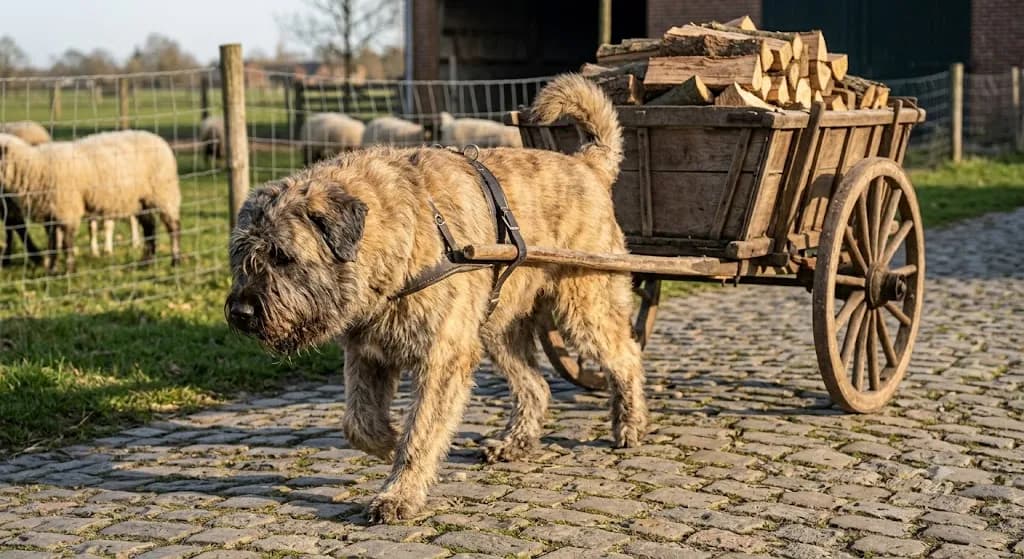
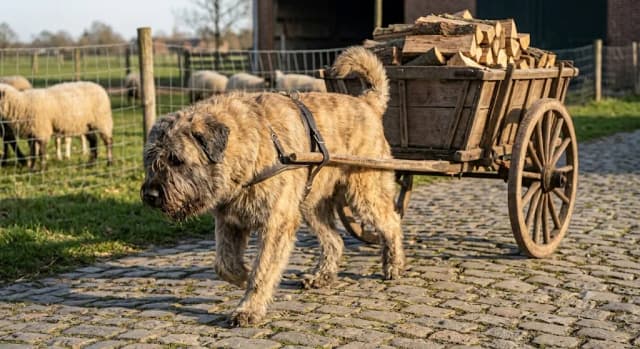
The breed comes from the farming country of Flanders, which spans parts of modern Belgium, France and the Netherlands. The name translates as "cowherd of Flanders". That was the job: moving cattle, guarding the farm and pulling carts loaded with milk churns or supplies.
Early on there was no single, fixed Bouvier. There were several regional working types, and farmers kept the dogs that showed strength, stamina, brains and reliability, whatever they looked like. The keepers worked long hours in foul weather and kept their heads under pressure.
Both World Wars nearly finished the breed, the first one especially, when much of Flanders became a battlefield. Farms were flattened and many dogs were lost. The Belgian army helped keep it alive by using Bouviers as messenger dogs, ambulance dogs and guards. After the wars, committed breeders rebuilt the numbers and set down a formal written standard.
By the mid-20th century the Bouvier was known well beyond rural Europe. Breed clubs formed, and it built a name as a working companion, police dog and guardian. The modern dog has not drifted far from those roots.
Appearance of the Bouvier des Flandres: Rugged Strength and Purpose
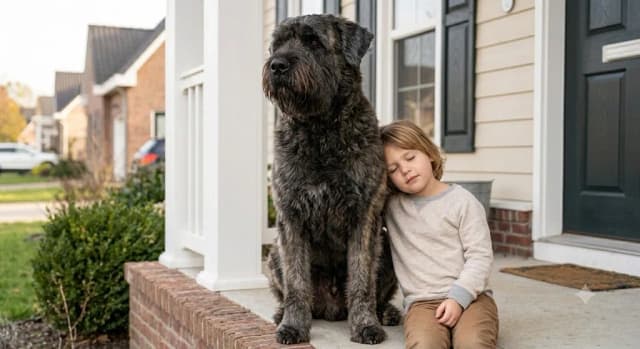
The Bouvier is powerful and compact, closer in bulk to the Old English Sheepdog than to the lighter herding breeds. Nothing on this dog is decorative.
Size, Build, and Structure
This is a large dog with heavy bone and a short, compact body. The frame is muscular rather than lean, which gave it the strength to herd, guard and pull a cart. Males are clearly broader and more imposing. Females are a little lighter but still solid. The chest is deep and wide, with plenty of lung room for a long working day.
Head, Expression, and Coat Texture
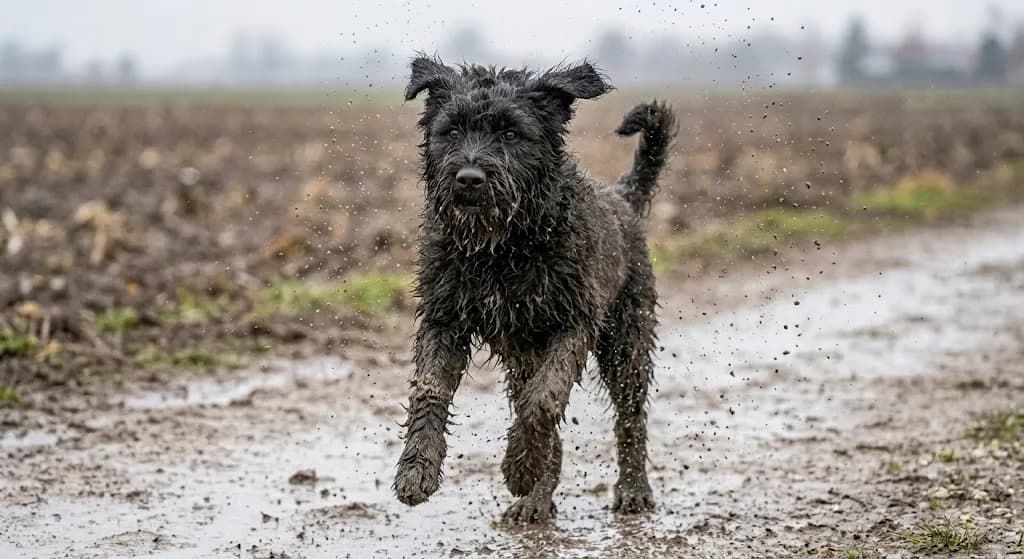
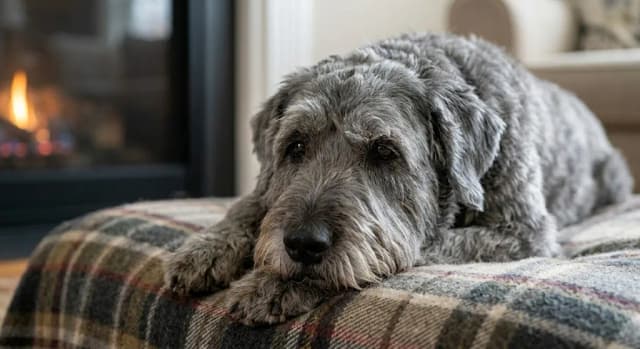
The head is the giveaway. Heavy eyebrows, a full beard and a thick moustache frame a broad, strong skull, and the dark, alert eyes miss very little. The coat is dense, rough and weatherproof. It was designed to keep out cold, wind and rain, not to look polished.
Coat Colour and Presentation
Colours run from black and dark grey through to fawn and brindle, and a small white mark on the chest is allowed. Most owners keep the coat at a practical working length so it still protects the dog without getting in the way. A Bouvier is meant to look rugged. Flowing is not the goal.
Movement and Presence
A Bouvier moves with a steady, powerful stride. It covers ground efficiently rather than fast, and it stays balanced doing it. It looks commanding, but not aggressive.
Different Types of the Bouvier des Flandres: One Breed, Distinct Working Influence
There is only one recognised Bouvier des Flandres. The small variations you see come down to function and environment, not formal sub-types.
Working Lines and Show Lines
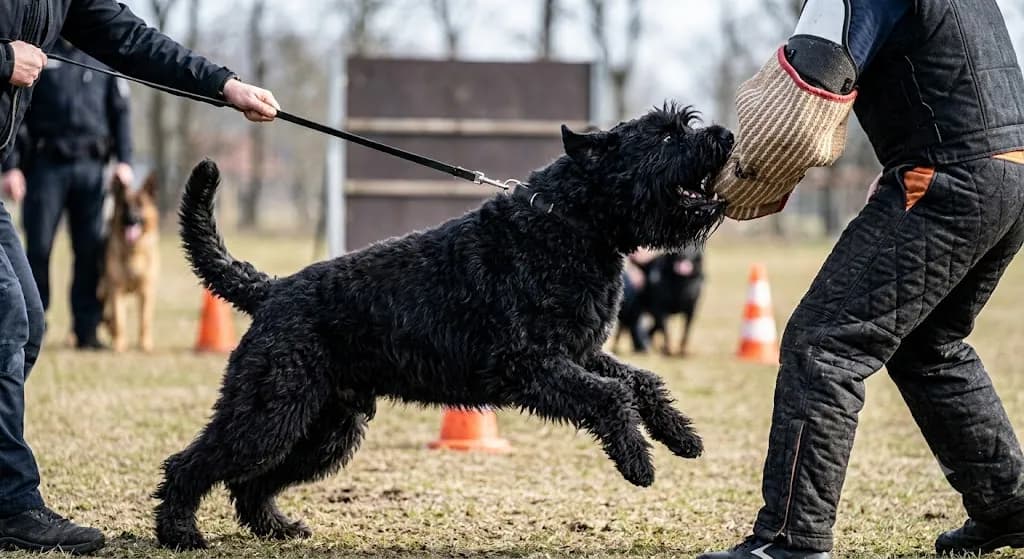
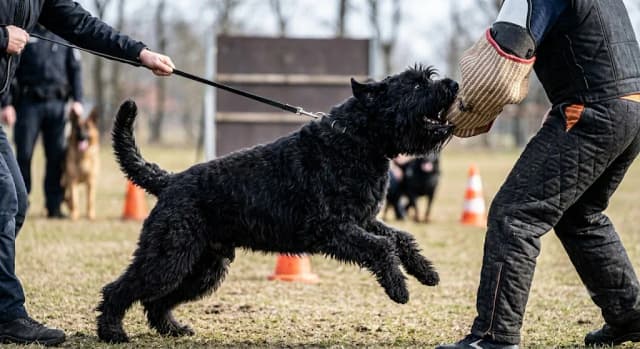
Working-line Bouviers lean towards strength, stamina and mental toughness. They often carry a plainer, more practical coat, heavier bone and a very task-focused attitude. You find them in herding, guarding, police work and search and rescue, where reliability matters far more than looks.
Show-line dogs follow the standard outline more closely, with more attention on coat, balance and symmetry. They look more polished. A well-bred show Bouvier keeps the breed's confidence, brains and protective streak, although some carry a little less drive than hard-worked lines.
Size and Gender Differences
The gap between males and females is often bigger than the gap between bloodlines. Males are larger and broader, and many show a stronger guarding instinct. Females tend to be lighter and more agile, and they may mature a bit sooner, which changes how you handle and train them.
Coat Density and Maintenance
Every Bouvier has a dense, rough coat, but texture varies. Some grow a heavy undercoat that needs brushing more often. Others have a coarser outer coat that is easier to keep on top of. This affects your grooming time, not the dog's temperament or its ability to work.
Temperament of the Bouvier des Flandres: Steady, Protective, and Deeply Loyal
The Bouvier is a thoughtful, confident dog with a calm temperament. With any guarding breed it pays to understand what a dog is signalling when it growls, because early warnings are worth reading properly. It is not excitable. It watches first, weighs things up, then acts.
Core Personality Traits
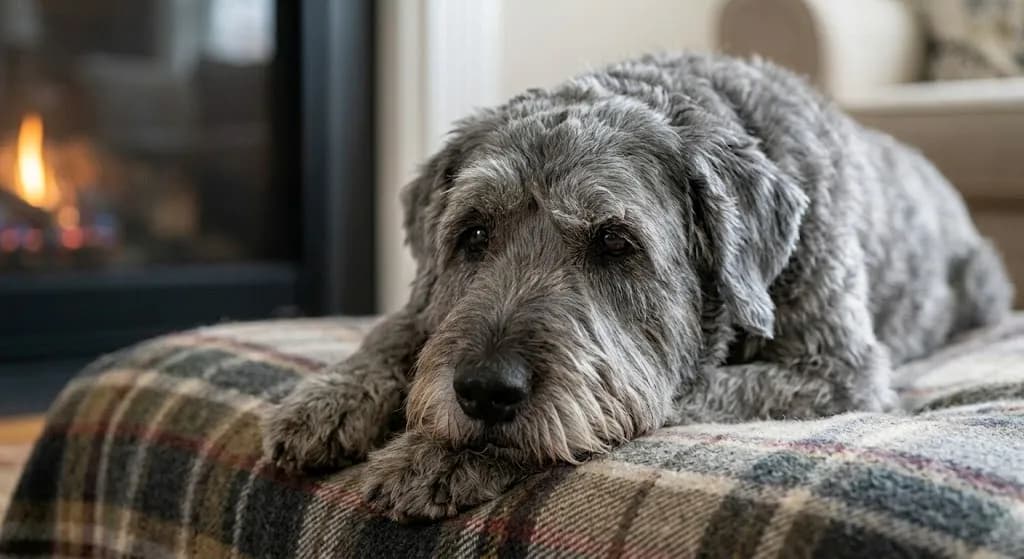
Steady and reliable sums it up. At home a Bouvier is affectionate but quiet about it, more devoted than demonstrative. Most pick a spot where they can watch the room without getting underfoot.
Behaviour With Strangers
Strangers get a cool, watchful reception. That is not fear or aggression. It is measured caution from a long line of guard dogs. A well-bred, well-socialised Bouvier stays calm, flags anything odd and then takes its cue from you.
Protective Instincts and Awareness
Guarding comes naturally. Bouviers are territorial and alert, which makes them very good watchdogs, and they do not tend to bark for nothing. If they believe a threat is real, they will hold their ground. Clear leadership and early socialisation keep that instinct in proportion.
Common Temperament Challenges
Most problems start when people underestimate the working dog inside. A Bouvier without enough mental work or structure can turn stubborn, bossy or overly suspicious. Adolescence is the hardest stage and calls for steady boundaries and training that keeps going.
Intelligence and Trainability of the Bouvier des Flandres: Purpose-Driven and Highly Capable
This is a clever working breed that does best when its brain is busy and it knows its role. Repetitive drills bore it quickly.
How Bouviers Learn
Bouviers pick up tasks fast, especially when they can see why they are doing them. Their intelligence is about solving problems and reading situations, not snapping into a sit on cue. Once learned, a behaviour tends to stick, as long as the dog respects the handler and the task still makes sense.
Training Style That Works Best
Be fair, consistent and confident. Positive reinforcement works well alongside clear boundaries. Once bonded, a Bouvier genuinely wants to please you, but it will test you if the rules keep shifting. Keep sessions calm, regular and focused on real-life skills rather than endless repetition.
Drive, Independence, and Control
A dog bred to work livestock on its own judgement will be strong-willed. That independence is useful on a farm and needs managing in a suburban house. Put early effort into impulse control, recall and calm behaviour around people and other animals. Left to its own devices, a Bouvier may decide a situation needs managing and take charge of it.
Long-Term Training and Mental Engagement
Training does not stop when puppyhood ends. Bouviers keep benefiting from new learning all their lives, through advanced obedience, herding, scent work or proper jobs around the property. Mental work matters as much as physical exercise.
Bouvier des Flandres and Family Life: Children, Other Pets, and the Home
A Bouvier can be a devoted, reliable family dog, but only in a house that respects its working and guarding instincts. It does best in an organised home with consistent leadership.
Living With Children
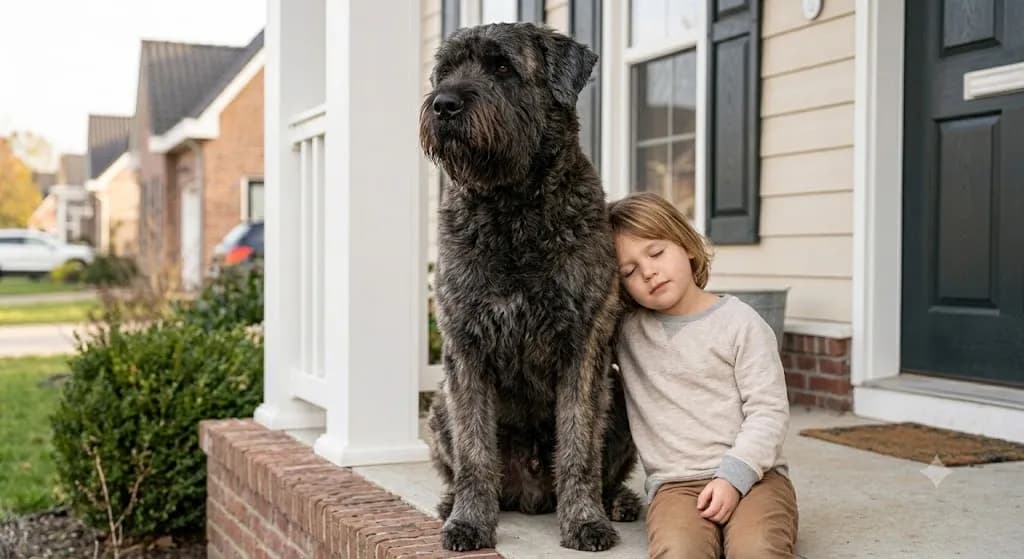
Most Bouviers are patient with the children in their own household, especially if they grew up together. Even so, their size, strength and herding background make them a better match for families with older children or teenagers who understand boundaries.
Young children can set off herding behaviour such as blocking, nudging and rounding them up. That is stressful for dog and child alike. Supervise, and teach both of them to respect each other from the start.
Compatibility With Other Dogs and Pets
How a Bouvier gets on with other animals comes down to early socialisation and ongoing management.
- Can live well with other dogs when introduced properly
- May be reserved or dominant with dogs it does not know
- Needs careful introductions to smaller pets because of its herding instinct
These are not naturally dog-social dogs. Most tolerate other dogs rather than seek them out, and they cope far better with structured meetings than with a chaotic off-lead dog park on a Saturday morning.
Home Environment and Daily Dynamics
A larger home with room to move and a securely fenced yard suits the breed best. Busy inner-city streets can overwhelm a young or inexperienced Bouvier, and a small Sydney terrace courtyard is a hard fit for a dog this size. Bouviers are happiest when they feel responsible for their home and people, and they will often set up where they can watch the comings and goings.
Regular isolation does not suit them. They are strongly attached to their people, and long days alone tend to produce frustration or unwanted behaviour. A home where someone is around for much of the day, or where the dog has a defined job, works best.
Health of the Bouvier des Flandres: What Owners Should Know
The Bouvier is generally a sturdy working breed. Its size, strength and genetic background still bring some specific health points that owners should understand early.
Breed-Specific Health Considerations
Plenty of Bouviers live healthy lives, but the breed may be prone to several conditions that are worth knowing about and discussing with your vet:
- Hip and elbow dysplasia: Common in large, heavy-boned breeds. Screened parents and a lean body weight help reduce long-term joint stress.
- Gastric dilatation-volvulus (bloat): A serious condition in deep-chested dogs that needs urgent veterinary attention. Smaller meals and no strenuous exercise around feed times are sensible precautions.
- Eye conditions: Cataracts and glaucoma may occur in some lines, so routine eye examinations are worthwhile.
- Cardiac issues: Subaortic stenosis has been reported in the breed, which is why heart screening matters.
- Neurological and muscular conditions: Bouvier des Flandres myopathy and epilepsy are known concerns in certain bloodlines.
- Endocrine and organ-related conditions: Hypothyroidism, megaesophagus, ectopic ureters and portosystemic shunts may also appear.
Genetic Testing and Health Screening
Good breeders health test before they breed. That usually means hip and elbow evaluations, a cardiac examination and an eye assessment by a veterinary ophthalmologist. Ask to see the documented results for both parents. It is the simplest way to cut the risk of inherited disease.
Veterinary Care and Preventative Management
Regular vet visits catch problems early. Cover the basics: vaccinations, parasite prevention, dental care and weight checks. On the east coast, that parasite plan should include paralysis tick prevention, and a coat this thick means running your hands right down to the skin after every bush walk. Bouviers mature slowly, so manage growth carefully to protect developing joints.
Long-Term Health Planning
Because of the breed's size and working build, many owners take out comprehensive pet insurance to cover unexpected vet bills. Keep an eye on the dog as it ages and adjust exercise and diet to suit. Well-bred Bouviers can stay active and comfortable well into their senior years.
Caring for the Bouvier des Flandres: Daily Needs and Long-Term Care
Daily care for a Bouvier goes well beyond food and a bed. That dense working coat also makes heat stress indoors a real risk in an Australian summer, so sort out cool floors, shade and air flow before January arrives.
Daily Care and Routine
Bouviers like predictable days that mix exercise, mental work and downtime. Daily walks, a few minutes of training and time with their people keep them settled. Without that structure, a Bouvier may try to impose its own order on the household, and that is where controlling behaviour starts.
Living Environment and Space Requirements
A bigger home with room to move suits this breed. It can manage suburban life, but cramped quarters or constant noise wear on it. A secure, well-fenced yard is essential. Not as a place to leave the dog to exercise itself, but as an extension of the territory it feels responsible for.
Managing Separation and Social Needs
These dogs bond hard and do poorly with long stretches alone. Short periods alone are manageable with training, but frequent or long absences tend to bring frustration and unwanted behaviour.
Senior Care and Ageing Considerations
Needs shift gradually with age. Stiff joints, less stamina and slower recovery are all common in older Bouviers. A softer bed, controlled exercise and the right nutrition keep them comfortable, and more frequent vet check-ups help you catch age-related changes early.
Grooming the Bouvier des Flandres: Coat Care, Maintenance, and Commitment
The Bouvier's dense, rough coat was built to protect a working dog in bad weather. The breed sheds very little, but grooming is frequent and non-negotiable.
Coat Type and Grooming Frequency
Under the coarse outer coat sits a thick undercoat that grabs dirt and mats quickly if ignored. Most owners keep the coat at a working length of around six centimetres, which balances protection with manageability. Regular grooming keeps the skin healthy and the dog comfortable.
Plan on attention several times a week. Active dogs, or those that spend a lot of time outdoors, often do better with a light brush every day. Grass seeds, burrs and bits of bark all end up in a Bouvier's coat after a run through long grass.
Essential Grooming Tasks
The aim is a coat that stays clean, functional and free of mats. The main jobs are:
- Brushing and combing: A slicker brush and a pin brush worked right down to the skin, then a wide-toothed comb to find the knots the brushes missed
- Mat prevention: Extra attention on the legs, belly, beard and behind the ears, where tangles form fastest
- Coat maintenance: Hand stripping or a professional groom once or twice a year, usually around the seasonal coat changes
Bathing and Hygiene
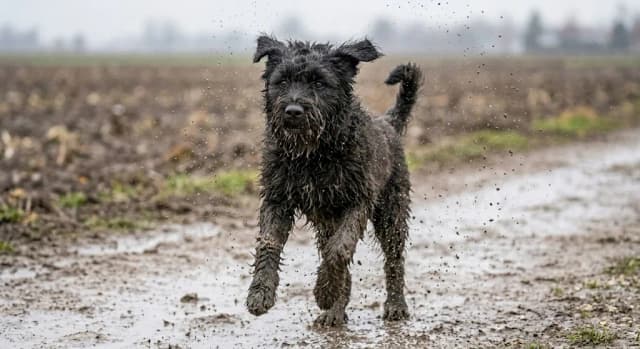
Bath as needed, especially after mud or wet weather. The coat is thick, so drying takes a while, and good ventilation matters to avoid skin problems. Many owners leave full baths and trims to a professional groomer.
Other hygiene jobs:
- Beard and moustache cleaning: Wipe out food and debris regularly to stop odour and irritation. Anyone who has watched a Bouvier drink will understand why
- Nail care: Trim every one to two weeks to keep posture and movement correct
- Ear checks: Look weekly and clean gently when needed
- Dental care: Brush the teeth or use suitable dental aids to protect oral health
Long-Term Grooming Commitment
Grooming a Bouvier takes patience and consistency. Start handling and grooming early so the adult dog accepts it calmly. Done regularly, it is also your best chance to spot lumps, ticks or sore skin before they turn into something bigger.
Exercise Needs of the Bouvier des Flandres: Purposeful Work and Structured Activity
A Bouvier needs more than a casual stroll to stay balanced. It is happiest when both body and brain get a proper workout.
Daily Exercise Requirements
A fully mature adult typically needs at least two hours of exercise a day. Spread that across structured walks, controlled free running and activities that make it think. A lead walk on its own is rarely enough.
Puppies and adolescents need more care. Keep their exercise frequent but controlled to protect growing joints: short walks, basic training and supervised play, not long runs. In a Queensland summer, move the longer sessions to early morning or after dark.
The Importance of Mental Stimulation
Mental work matters as much as physical work. A bored Bouvier gets frustrated, and a frustrated Bouvier gets destructive. Activities that suit the breed include:
- Obedience and advanced training work
- Herding-style games or scent-based tasks
- Puzzle feeders and problem-solving exercises
- Structured play that builds focus and control
Off-Lead Activity and Safety
Bouviers enjoy room to move, but it has to be secure. Their guarding instinct and sheer strength mean off-lead time belongs in safely enclosed areas. A reliable recall is achievable with training. Never assume it in open or unfamiliar ground.
Consequences of Under-Exercise
An under-worked Bouvier may become restless, noisy, bossy or destructive. That is unmet need, not a temperament fault. Give it enough work and structure and it is calm and focused at home.
Feeding the Bouvier des Flandres: Nutrition for Strength, Growth, and Longevity
A large, muscular working dog needs balanced nutrition at every life stage. The goal is steady growth, healthy joints and sustained energy, without piling on weight or upsetting the gut.
Nutritional Needs by Life Stage
Bouvier puppies grow slowly and should not be pushed. A large-breed puppy food supports controlled growth and eases the load on developing joints. Adults need nutrient-dense food to hold muscle and fuel daily activity. Seniors usually need fewer calories and joint-supporting nutrients.
Protein, Fats, and Energy Balance
For an active dog, the Bouvier does not need especially high protein compared with some other working breeds. Moderate, good-quality protein with sensible fat levels supports strength and stamina without unnecessary bulk. Overfeeding is the bigger risk. Extra weight goes straight onto the joints.
Feeding Practices and Digestive Health
Bouviers are prone to digestive problems, including bloat, so how you feed matters. Owners should:
- Split the daily ration into two or more smaller meals
- Avoid vigorous exercise straight before or after eating
- Keep feeding times and portions consistent
- Check weight regularly and adjust the amount as needed
Fresh, clean water should always be available, especially after exercise.
Treats and Supplementation
Treats are useful for training, but count them as part of the daily calories. Joint supplements such as glucosamine or omega-3 fatty acids may help, particularly for active or older dogs. Talk to your vet before adding supplements or switching to a home-prepared diet.
Training the Bouvier des Flandres: Structure, Purpose, and Partnership
Training goes best when it rests on mutual respect and a clear purpose, which is why starting obedience work early pays off with this breed. Bouviers were developed to think for themselves while working closely with people, and that still shapes how they respond.
Building the Right Foundation
Start the day the puppy comes home. Bouviers are observant and pick up good and bad habits equally fast. Calm consistency, clear rules and confident handling build trust and head off power struggles as the dog matures.
Early priorities:
- Basic obedience and impulse control
- Polite behaviour around people and animals
- Loose-lead walking and calm greetings
Motivation and Learning Style
A Bouvier is not a robot. It learns best when the work feels meaningful. Short, focused sessions with a bit of problem-solving or real-world use hold its attention far better than drills.
Reward-based training works well, as long as firm boundaries come with it. Inconsistent handling breeds stubbornness, because a Bouvier spots gaps in leadership very quickly.
Socialisation and Environmental Exposure
Early and ongoing socialisation is essential. Meeting different places, people, dogs and situations helps prevent excessive suspicion or overprotectiveness in the adult. Keep the experiences controlled. A calm coffee outside a café, or a vet visit that ends in a treat, builds more confidence than a chaotic free-for-all.
Ongoing Training and Mental Work
Keep training through adulthood. Bouviers are at their best with a role, whether that is advanced obedience, scent work, guarding-style tasks or structured jobs at home. The mental work keeps them balanced and heads off boredom.
Bouvier des Flandres Price and Ongoing Costs: What to Expect
A Bouvier is a long-term financial commitment that goes well past the purchase price, so it is worth seeing which Bouvier litters are listed in Australia before you commit.
Purchase Price
In Australia, a well-bred puppy from a reputable breeder sits at the higher end of the price range. That reflects how rare the breed is, the cost of health testing and the time responsible breeding takes. Puppies from ethical breeders are usually well socialised and come with documented health screening.
Ongoing Care Costs
Everyday costs run above average because of the dog's size, diet and upkeep. Budget for:
- Quality nutrition: Large-breed food suited to age and activity level
- Grooming: Regular professional grooming, or proper tools plus the time to do it at home
- Veterinary care: Check-ups, vaccinations, parasite prevention and any breed-related health management
- Training and enrichment: Puppy classes, ongoing training and activities for the mind
Do not forget annual council registration on top of all that.
Insurance and Long-Term Planning
Many owners take out comprehensive pet insurance for unexpected vet bills, given the breed's size and its predisposition to certain conditions. Costs often climb with age as joint care, diet changes and more frequent vet visits come into play.
Financial Readiness
This is not a cheap dog to run. For owners who are financially prepared, though, the spending buys a healthy, well-cared-for dog.
Buying Advice for the Bouvier des Flandres: Choosing the Right Puppy or Adult Dog
Choosing a Bouvier takes patience, and it helps to know the red flags in a puppy contract before you sign anything. This is a strong, clever working breed, and finding the right dog starts with the right source.
Choosing a Responsible Breeder
Good breeders focus on health, temperament and sound structure, not looks alone. They will talk openly about the breed's challenges as well as its strengths, and they expect you to ask questions.
When speaking with breeders, look for:
- Documented health testing for hips, elbows, heart and eyes
- Puppies raised in a home environment with early socialisation
- Breeders who check whether you suit the breed, rather than selling to anyone
- Ongoing support after the sale
Walk away from sellers who cannot show health records, hurry you along or play down the breed's needs.
Considering Rescue or Adult Dogs
Adult Bouviers occasionally come up through breed rescue. They can suit experienced owners who know the breed and are ready to work through a settling-in period. Rescue groups usually provide detailed assessments to help match each dog to the right home.
Assessing Your Readiness
Be honest about your lifestyle, space, time and experience before committing. The Bouvier is not for first-time owners or anyone after a low-maintenance dog. It needs leadership, structure and daily engagement.
Making an Informed Choice
Meet adult Bouviers, talk to experienced owners and get a real picture of daily life with the breed. Chosen carefully, a Bouvier is a capable, dependable partner for many years.
Bringing Home a Bouvier des Flandres: Is This the Right Breed for You?
The Bouvier suits owners who value structure, commitment and partnership. It is powerful and clever, and it will not fade into the background.
For the right home, the payoff is big: a steady guardian, a dependable working companion and a family dog with a deep bond. Space, time, grooming and ongoing training are not optional. Meet them and the relationship lasts.
If you are thinking about a Bouvier des Flandres, look hard at your lifestyle first, then talk to reputable breeders or browse trusted platforms like Pups4Sale, where responsible listings connect serious owners with well-bred dogs. A careful choice now sets you and the dog up for many good years together.
Frequently Asked Questions
Related Breeds
Other working breeds on Pups4Sale.
 BoxerLarge • Working
 Bracco ItalianoLarge • Gundog
 Bull ArabLarge • Working
 Cane CorsoLarge • Utility / Working
 Doberman PinscherLarge • Working
 Dogue de BordeauxGiant • Utility (Group 6)